
Most of what keeps a household safe and comfortable is invisible on an ordinary day. Current flows through hidden conductors to every outlet and appliance, warm air moves through ducts tucked behind ceilings, and water arrives and departs through pipes buried in walls and slabs. Overhead, layers of shingles, membranes, and flashing turn back rain and wind, while channels at the eaves carry runoff safely away. These systems rarely draw attention when they work well, yet each one carries real responsibility for the health of the structure and the people inside it.
Trouble begins when those quiet systems are pushed past their limits. An overloaded panel warms its connections until a breaker trips or worse, a dirty burner struggles through the first cold snap, and a clogged channel sends a sheet of water down the siding during a downpour. Large limbs hang over the shingles waiting for the next windstorm, and moisture behind cabinets draws insects into the walls. Strong wiring, steady heat, and a roofline that sheds every storm come from treating the house as one interconnected whole, inspecting each layer regularly and upgrading weak points before they turn into emergencies.
Felling Storm-Weakened Trunks and Grinding Leftover Stumps

Large specimens near the house can become serious hazards after years of storms, disease, and decay. Trunks with internal rot, deep cracks, or root damage from construction may look sturdy but fail without warning when saturated soil and high winds combine. Leaning stems, dead crowns, and fungal conks at the base signal compromised structure. When one falls, it can crush shingles, punch through ceilings, snap power lines, and block driveways, causing damage far more costly than proactive work.
A qualified tree removal company begins with an assessment of the specimen’s condition, lean, surrounding targets, and overhead utilities, often guided by an ISA Certified Arborist. Crews wearing proper protective gear climb or use bucket trucks and cranes to remove the canopy in sections, rigging heavy limbs with ropes and friction devices to lower them safely. The trunk is felled or sectioned down, and wood is chipped or cut into firewood lengths. Stump grinders reduce the remaining stump and surface roots to six to twelve inches below grade for replanting.
Designing Zoned Ductwork and Installing Variable-Speed Systems
Comfort problems in many houses come from a single thermostat trying to serve rooms with very different heating and cooling needs. Upstairs bedrooms bake in summer while basements stay chilly, sunrooms swing wildly with the sun, and rooms at the end of long duct runs never quite reach the setpoint. Single-stage equipment cycles on and off at full output, creating temperature swings, drafts, noise, and poor humidity control throughout the year.
An experienced HVAC company begins with Manual J load calculations for each room and a Manual D duct design that sizes trunks, branches, and returns for proper airflow. Zoning divides the house into areas with separate thermostats and motorized dampers controlled by a central panel, with bypass or static pressure management to protect equipment. Variable-speed furnaces, heat pumps, and air handlers adjust output to match demand, running longer at lower speeds for steady temperatures, quieter operation, and better humidity control.
Cleaning Burner Assemblies and Measuring Combustion Efficiency
Gas heating equipment builds up dust, rust flakes, and soot over a season of operation. Dirty burners produce uneven, lazy flames that waste fuel and create carbon monoxide, while clogged ports and misaligned burners can cause delayed ignition, a dangerous condition where gas accumulates before lighting with a loud boom. Restricted airflow from dirty filters and blower wheels raises heat exchanger temperatures, stressing the metal and increasing the risk of cracks.
Thorough furnace services begin with shutting off power and gas, then removing and cleaning burners, flame sensors, and pilot assemblies with soft brushes and compressed air. Technicians inspect the heat exchanger for cracks, clean the blower wheel, and replace filters. After reassembly, a combustion analyzer measures oxygen, carbon monoxide, and stack temperature to calculate efficiency, and gas pressure is adjusted with a manometer to manufacturer specifications. Temperature rise, static pressure, and safety controls are verified, ensuring steady, efficient heat all winter. Vent connectors and flue pipes are also checked for proper slope, secure joints, and signs of corrosion or backdrafting.
Brazing Leaking Refrigerant Lines and Replacing Burned-Out Capacitors
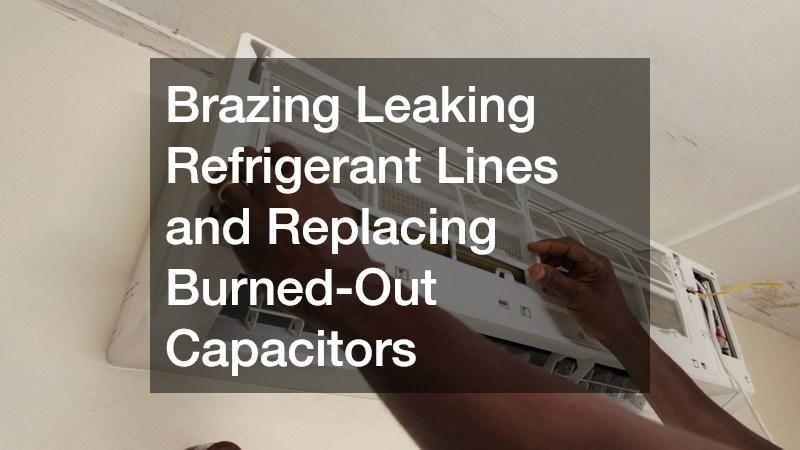
Cooling systems depend on a sealed refrigerant circuit and reliable electrical components to move heat outdoors. Vibration, rub-through at line set supports, and formicary corrosion in copper coils create pinhole leaks that slowly drain refrigerant, reducing capacity and causing coils to freeze. Run capacitors weaken from heat and age, leaving compressors and fan motors humming without starting. These failures typically appear on the hottest days, when the system is working hardest, and the household needs cool air most.
Fast ac repair begins with measuring capacitor values with a meter and replacing any that fall outside the rated microfarad tolerance with properly matched units. When low refrigerant is suspected, technicians locate leaks using electronic detectors, bubble solution, or nitrogen pressure testing. Leaking joints and lines are brazed with a nitrogen purge to prevent internal oxidation, and failed coils are replaced. The system is evacuated to 500 microns, verified with a decay test, and charged by weight using superheat or subcooling to confirm performance.
Inspecting Moist Hiding Spots and Rotating Bait Formulations
German cockroaches cluster where warmth, moisture, and food come together: behind refrigerators and dishwashers, under sinks, inside cabinet hinges, and around leaking pipes. A single female can produce hundreds of offspring in a year, and populations grow rapidly when hiding spots are plentiful. Their droppings and shed skins contaminate surfaces and trigger allergies and asthma. Over-the-counter sprays often scatter colonies deeper into walls and can build resistance.
Professional cockroach control begins with a detailed inspection using flashlights and sticky monitors to find moist hiding spots and gauge population size, along with checks for leaks that provide water. Technicians place small dots of gel bait in cracks, hinges, and voids where insects travel, rotating among active ingredient classes such as indoxacarb, fipronil, and abamectin to prevent bait aversion and resistance. Insect growth regulators break the breeding cycle, leaks are repaired, and cracks are sealed. Follow-up visits monitor results until activity stops, and sticky monitors left in place give early warning if a new population arrives in grocery bags or appliance boxes.
Clearing Clogged Troughs and Rehanging Sagging Channels
Channels at the eaves collect thousands of gallons of runoff each year and direct it away from siding, windows, and foundations. When leaves, seeds, and shingle granules accumulate, water overflows the front edge, splashing mud onto walls and pooling against the foundation. The weight of trapped debris, water, and ice pulls hangers loose, causing sections to sag, separate at the seams, and pull away from fascia boards that may rot from constant wetting.
A clean, properly pitched gutter moves water away from the house quickly, and keeping it that way starts with clearing debris by hand and flushing outlets and downspouts with water to confirm free flow. Sagging sections are rehung with hidden hangers spaced every 24 inches and fastened with long structural screws into the rafter tails, restoring a pitch of about a quarter inch per ten feet toward outlets. Rotted fascia is replaced, seams are resealed, and quality mesh guards help keep debris out.
Stripping Storm-Damaged Shingles and Upgrading Ridge Ventilation
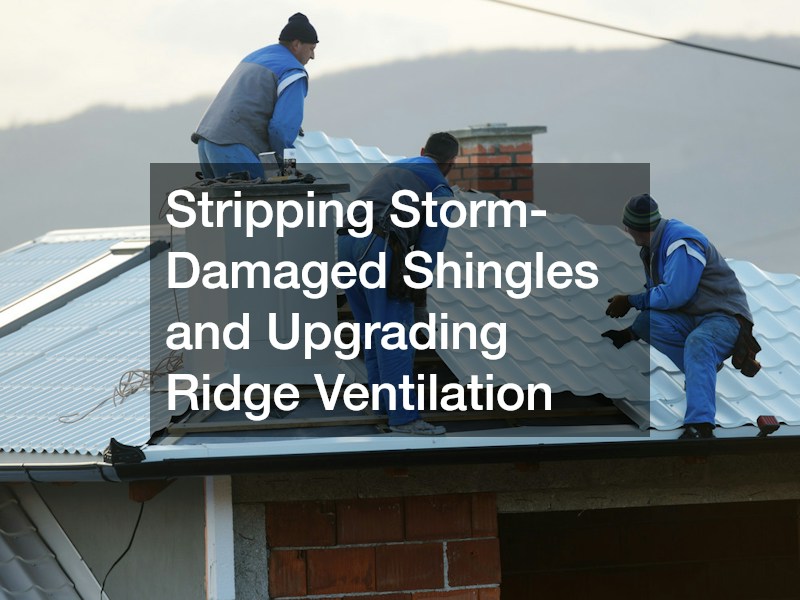
Severe storms batter the shell overhead with hail, wind, and wind-driven rain. Hail bruises shingles, knocking off granules and cracking the mat beneath, while high winds lift and tear tabs. Once the protective layer is breached, water reaches underlayment and decking. Poor attic ventilation compounds the damage, trapping heat that bakes shingles from below in summer and moisture that condenses on sheathing in winter, shortening the life of the entire system.
Skilled local roofers begin by documenting storm damage, then stripping shingles and underlayment to the deck, replacing soft or delaminated sheathing with new plywood or OSB fastened with ring-shank nails. Ice-and-water membrane is installed at eaves, valleys, and penetrations, with synthetic underlayment over the remaining deck. Drip edge, step flashing, and pipe boots are replaced, and impact-resistant Class 4 shingles are fastened to high-wind specifications. Continuous ridge vents paired with soffit intake vents create balanced airflow that keeps the attic cool and dry.
Reconfiguring Outdated Floor Plans and Reinforcing Aging Framing
Older houses often have compartmentalized layouts with small rooms, narrow hallways, and limited natural light that no longer suit modern living. At the same time, decades of settling, moisture, and past alterations can weaken the structure. Notched joists, undersized headers, sagging beams, and rot around plumbing and exterior walls compromise strength and make floors bouncy or uneven, problems that must be addressed before any major layout changes.
A seasoned home remodeling contractor begins with a thorough assessment of the structure, utilities, and existing layout, working with architects and structural engineers to plan changes. When walls are removed, load-bearing elements are replaced with properly sized LVL or steel beams and posts that carry loads to new footings. Sagging floors are leveled with sistered joists, steel flitch plates, or adjustable columns, and rotted framing is replaced. Plumbing, wiring, and ductwork are relocated to code, and finishes are completed with permits and inspections.
Snaking Stubborn Drain Clogs and Flushing Sediment-Filled Tanks
Drains and water heaters take a daily beating that eventually catches up with them. Hair, soap scum, grease, and food scraps build up in traps and branch lines, causing slow drains, gurgling, and backups that resist plungers and chemical cleaners. Inside tank heaters, minerals in the water settle as sediment that insulates the burner or elements from the water, causing rumbling noises, reduced hot water capacity, higher energy bills, and premature tank failure.
Dependable local plumbers begin by clearing drains with hand augers or motorized drum machines fitted with cutting heads that break up clogs and retrieve debris, and camera inspections reveal deeper issues. For tank heaters, technicians shut off the energy supply, connect a hose to the drain valve, and flush sediment until the water runs clear, sometimes using a descaling solution. Anode rods are inspected and replaced when depleted, temperature and pressure relief valves are tested, and thermostats are set to 120 degrees.
Upgrading Overloaded Panels and Installing Arc-Fault Breakers

Electrical systems in older homes were designed for far lighter loads than today’s appliances, electronics, and vehicle chargers demand. Overloaded panels run hot, causing breakers to trip frequently and connections to loosen and arc. Some older panels, such as Federal Pacific Stab-Lok and Zinsco models, have breakers known to fail to trip during overloads. Damaged cords, loose connections, and deteriorated insulation can create arc faults that ignite nearby framing and insulation.
A licensed local electrician begins with a load calculation and a thorough inspection of the service, panel, grounding, and branch circuits. Overloaded or unsafe panels are replaced with modern 200-amp panels with copper bus bars and ample breaker spaces, along with upgraded service entrance conductors and grounding electrodes. Combination arc-fault circuit interrupter breakers are installed on bedroom, living area, and other required circuits, detecting dangerous arcing and cutting power before a fire can start. GFCI protection and whole-home surge suppression complete the upgrade.
A house that stays safe and comfortable through every season relies on strong wiring, steady heat, reliable plumbing, and a weathertight shell working together. Modern panels and protective breakers deliver power safely, while well-designed and well-maintained heating and cooling equipment keeps every room comfortable. Clear drains and healthy water heaters keep daily routines running smoothly, and a sound structure supports everything above it, inside and out.
Outside, the shell and drainage system shed rain and snow, and well-managed landscapes keep large limbs away from the structure. Regular inspections and seasonal maintenance, from pest monitoring and drain care to equipment tune-ups and roofline checks, catch small problems before they become costly emergencies. Upgrading aging components on a planned schedule spreads costs over time and avoids rushed decisions after a failure. A simple log of service dates and findings helps owners see which systems are nearing the end of their useful life.
The result is a home that stands firm in storms, stays warm in winter and cool in summer, and supports the people inside with safe, reliable systems. With careful planning, quality materials, and skilled workmanship, homeowners can protect their investment and enjoy a home that performs well for decades, no matter what the weather brings.